CFChooseField
Healthcare

Veterinarians

Diagnose, treat, or research diseases and injuries of animals. Includes veterinarians who conduct research and development, inspect livestock, or care for pets and companion animals.
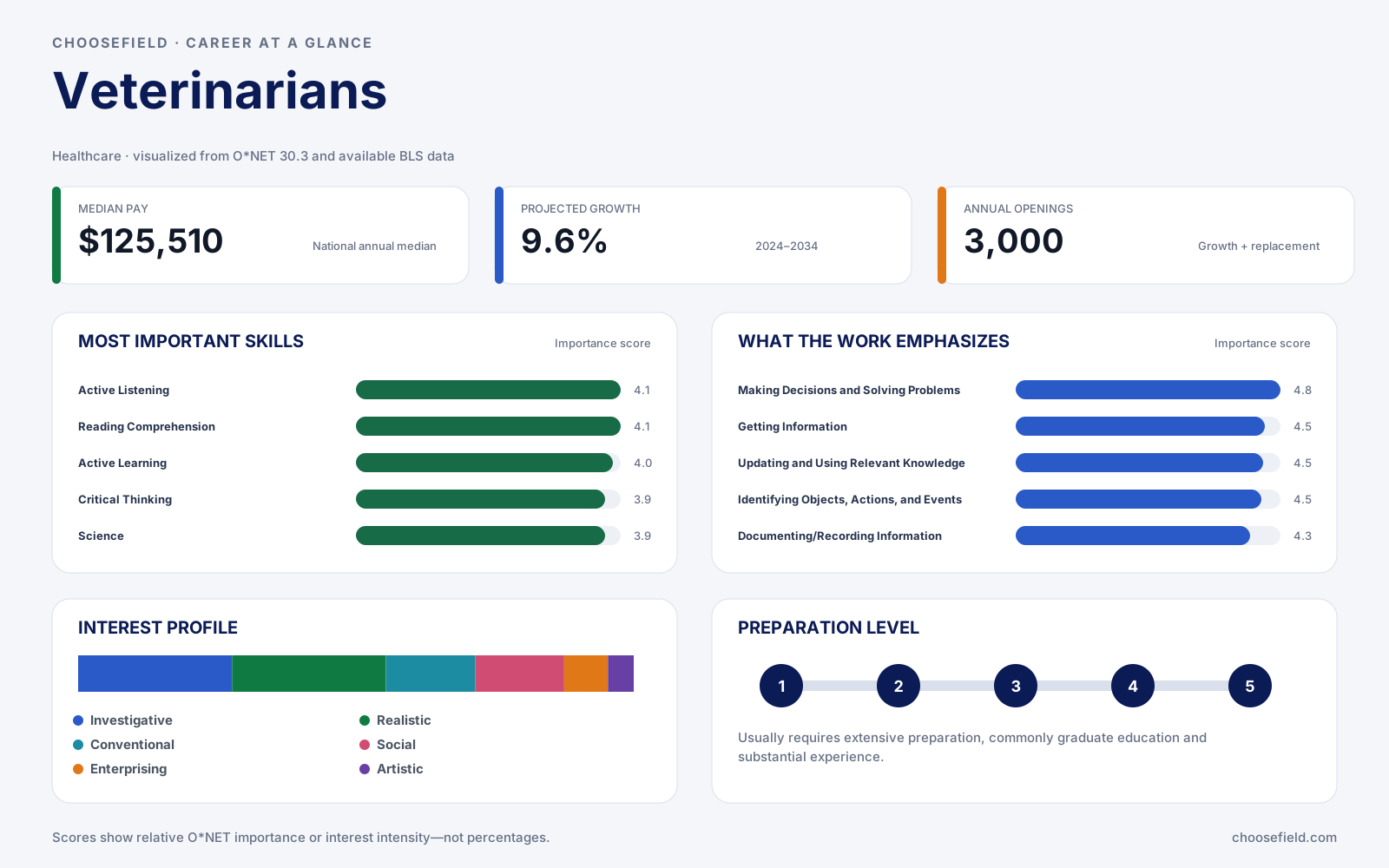
Visual summary of pay, outlook, skills, interests, and preparation for Veterinarians

Median pay

$125,510
Median annual pay for Veterinarians.
U.S. Bureau of Labor Statistics · 2024
View source ↗

10-year growth

9.6%
Projected employment growth from 2024 to 2034.
U.S. Bureau of Labor Statistics · 2024–2034 projections
View source ↗

Annual openings

3,000
Projected annual openings, including growth and replacement demand.
U.S. Bureau of Labor Statistics · 2024–2034 projections
View source ↗

Employment

86,400
Estimated U.S. employment for Veterinarians in 2024.
U.S. Bureau of Labor Statistics · 2024
View source ↗

Jobs added or lost

+8,300
Projected numeric employment change from 2024 to 2034.
U.S. Bureau of Labor Statistics · 2024–2034 projections
View source ↗

Entry preparation

Doctoral or professional degree
Typical education needed to enter Veterinarians.
U.S. Bureau of Labor Statistics · 2024 profile
View source ↗
O*NET occupation profile

What the work involves

Strongest O*NET signals first.

Essential skills

  1. 1Active Listening
  2. 2Reading Comprehension
  3. 3Active Learning
  4. 4Critical Thinking
  5. 5Science
  6. 6Speaking

Knowledge areas

  1. 1Biology
  2. 2Medicine and Dentistry
  3. 3Customer and Personal Service
  4. 4English Language
  5. 5Mathematics
  6. 6Education and Training

Abilities

  1. 1Oral Comprehension
  2. 2Oral Expression
  3. 3Written Comprehension
  4. 4Deductive Reasoning
  5. 5Inductive Reasoning
  6. 6Near Vision

Career interests

  1. 1Investigative
  2. 2Realistic
  3. 3Conventional
  4. 4Social
  5. 5Enterprising
  6. 6Artistic

Work styles

  1. 1Attention to Detail
  2. 2Dependability
  3. 3Cautiousness
  4. 4Integrity
  5. 5Intellectual Curiosity
  6. 6Stress Tolerance

Work activities

  1. 1Making Decisions and Solving Problems
  2. 2Getting Information
  3. 3Updating and Using Relevant Knowledge
  4. 4Identifying Objects, Actions, and Events
  5. 5Documenting/Recording Information
  6. 6Performing for or Working Directly with the Public

Work context

  1. 1Face-to-Face Discussions with Individuals and Within Teams
  2. 2Telephone Conversations
  3. 3Indoors, Environmentally Controlled
  4. 4Contact With Others
  5. 5Work With or Contribute to a Work Group or Team
  6. 6Frequency of Decision Making

Representative tasks

  • Treat sick or injured animals by prescribing medication, setting bones, dressing wounds, or performing surgery.
  • Inoculate animals against various diseases, such as rabies or distemper.
  • Examine animals to detect and determine the nature of diseases or injuries.
  • Collect body tissue, feces, blood, urine, or other body fluids for examination and analysis.
  • Operate diagnostic equipment, such as radiographic or ultrasound equipment, and interpret the resulting images.
  • Educate the public about diseases that can be spread from animals to humans.
  • Counsel clients about the deaths of their pets or about euthanasia decisions for their pets.
  • Advise animal owners regarding sanitary measures, feeding, general care, medical conditions, or treatment options.

Software and tools

Adobe Acrobat · hot technologyMicrosoft Word · hot technologyMicrosoft PowerPoint · hot technologyMicrosoft Outlook · hot technologyMicrosoft Office software · hot technologyMicrosoft Excel · hot technologyMicrosoft Access · hot technologySneakers Software DVMax PracticeMobile Data Software VetInfoIntraVetInformaVet ALIS-VETImproMed Infinity

Sources

BLS provides national pay, employment, and projections. O*NET provides skills, interests, preparation, tasks, work context, and tools.