CFChooseField
Education

Preschool Teachers, Except Special Education

Instruct preschool-aged students, following curricula or lesson plans, in activities designed to promote social, physical, and intellectual growth.
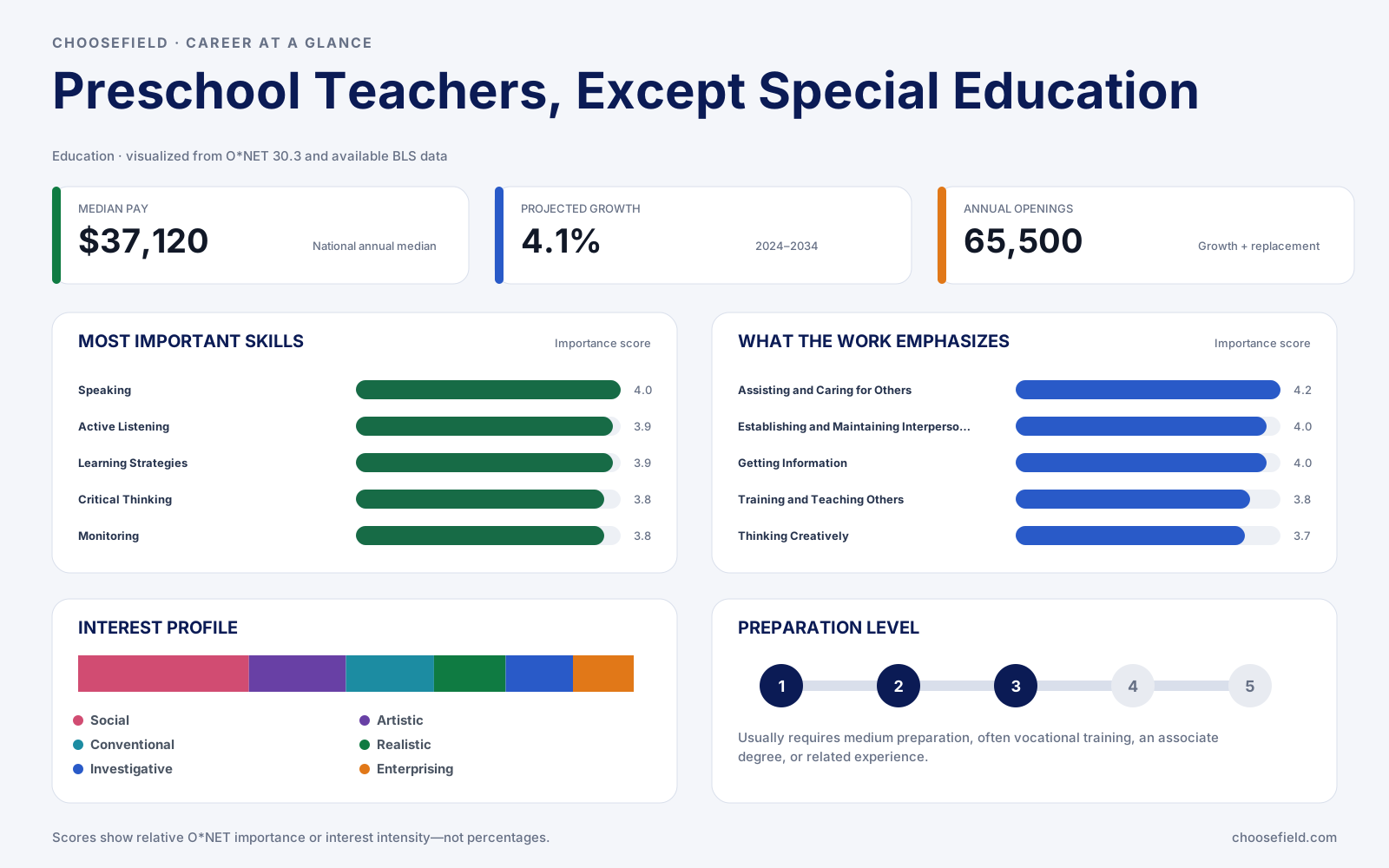
Visual summary of pay, outlook, skills, interests, and preparation for Preschool Teachers, Except Special Education

Median pay

$37,120
Median annual pay for Preschool Teachers, Except Special Education.
U.S. Bureau of Labor Statistics · 2024
View source ↗

10-year growth

4.1%
Projected employment growth from 2024 to 2034.
U.S. Bureau of Labor Statistics · 2024–2034 projections
View source ↗

Annual openings

65,500
Projected annual openings, including growth and replacement demand.
U.S. Bureau of Labor Statistics · 2024–2034 projections
View source ↗

Employment

555,100
Estimated U.S. employment for Preschool Teachers, Except Special Education in 2024.
U.S. Bureau of Labor Statistics · 2024
View source ↗

Jobs added or lost

+22,900
Projected numeric employment change from 2024 to 2034.
U.S. Bureau of Labor Statistics · 2024–2034 projections
View source ↗

Entry preparation

Associate's degree
Typical education needed to enter Preschool Teachers, Except Special Education.
U.S. Bureau of Labor Statistics · 2024 profile
View source ↗
O*NET occupation profile

What the work involves

Strongest O*NET signals first.

Essential skills

  1. 1Speaking
  2. 2Active Listening
  3. 3Learning Strategies
  4. 4Critical Thinking
  5. 5Monitoring
  6. 6Reading Comprehension

Knowledge areas

  1. 1Education and Training
  2. 2English Language
  3. 3Public Safety and Security
  4. 4Customer and Personal Service
  5. 5Psychology
  6. 6Administration and Management

Abilities

  1. 1Oral Comprehension
  2. 2Oral Expression
  3. 3Speech Clarity
  4. 4Problem Sensitivity
  5. 5Originality
  6. 6Fluency of Ideas

Career interests

  1. 1Social
  2. 2Artistic
  3. 3Conventional
  4. 4Realistic
  5. 5Investigative
  6. 6Enterprising

Work styles

  1. 1Cooperation
  2. 2Dependability
  3. 3Empathy
  4. 4Optimism
  5. 5Social Orientation
  6. 6Sincerity

Work activities

  1. 1Assisting and Caring for Others
  2. 2Establishing and Maintaining Interpersonal Relationships
  3. 3Getting Information
  4. 4Training and Teaching Others
  5. 5Thinking Creatively
  6. 6Developing and Building Teams

Work context

  1. 1Contact With Others
  2. 2Work With or Contribute to a Work Group or Team
  3. 3Indoors, Environmentally Controlled
  4. 4Face-to-Face Discussions with Individuals and Within Teams
  5. 5Physical Proximity
  6. 6Coordinate or Lead Others in Accomplishing Work Activities

Representative tasks

  • Teach basic skills, such as color, shape, number and letter recognition, personal hygiene, and social skills.
  • Establish and enforce rules for behavior and procedures for maintaining order.
  • Adapt teaching methods and instructional materials to meet students' varying needs and interests.
  • Provide a variety of materials and resources for children to explore, manipulate, and use, both in learning activities and in imaginative play.
  • Serve meals and snacks in accordance with nutritional guidelines.
  • Attend to children's basic needs by feeding them, dressing them, and changing their diapers.
  • Meet with parents and guardians to discuss their children's progress and needs, determine their priorities for their children, and suggest ways that they can promote learning and development.
  • Organize and lead activities designed to promote physical, mental, and social development, such as games, arts and crafts, music, storytelling, and field trips.

Software and tools

Microsoft Word · hot technologyMicrosoft Office software · hot technologyMicrosoft Excel · hot technologyAppletreeSchoologyPadletNearpodIntrado SchoolMessengerGoogle MeetGoogle ClassroomFlipgridEmail software

Sources

BLS provides national pay, employment, and projections. O*NET provides skills, interests, preparation, tasks, work context, and tools.