CFChooseField
Healthcare

Physician Assistants

Provide healthcare services typically performed by a physician, under the supervision of a physician. Conduct complete physicals, provide treatment, and counsel patients. May, in some cases, prescribe medication. Must graduate from an accredited educational program for physician assistants.
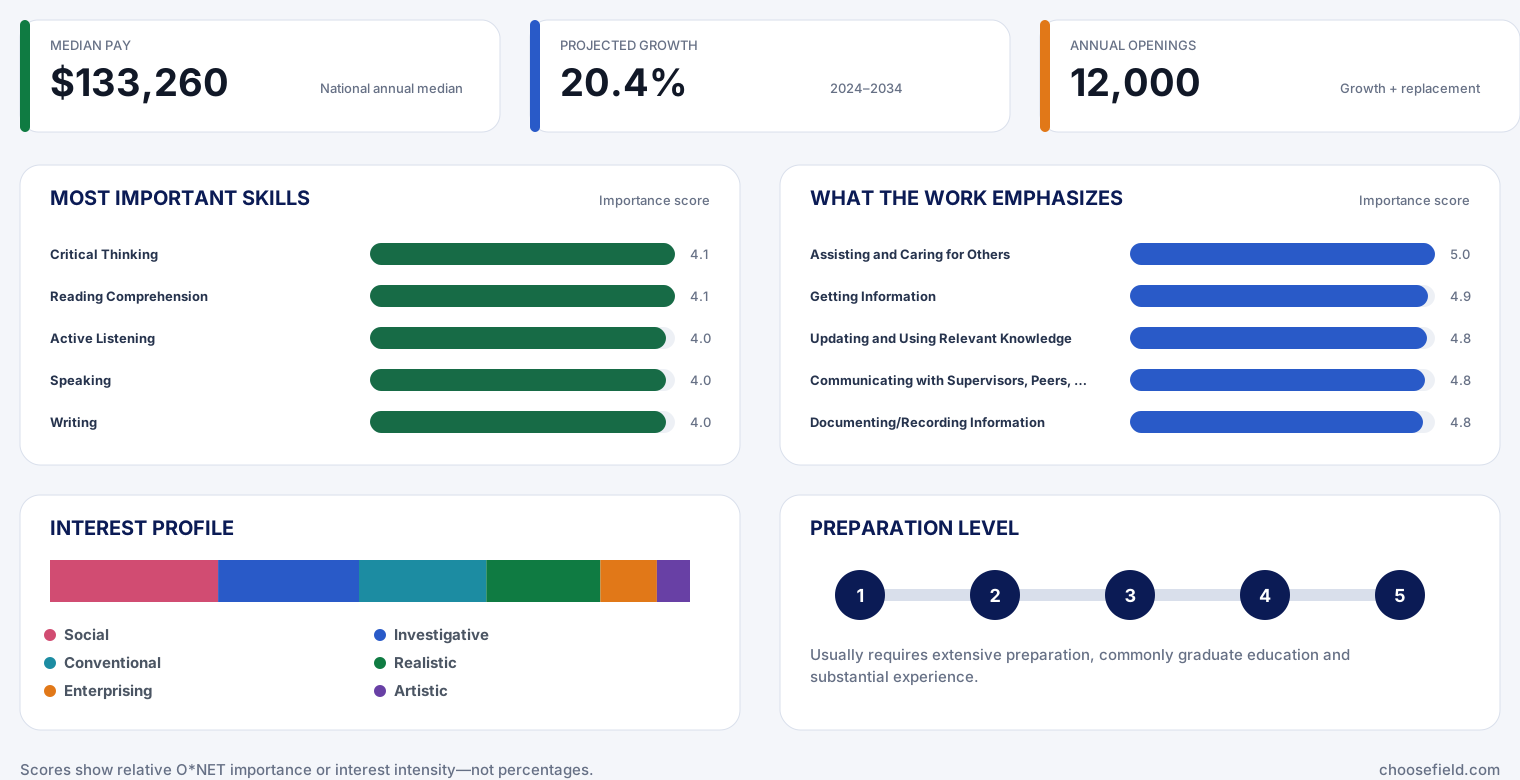
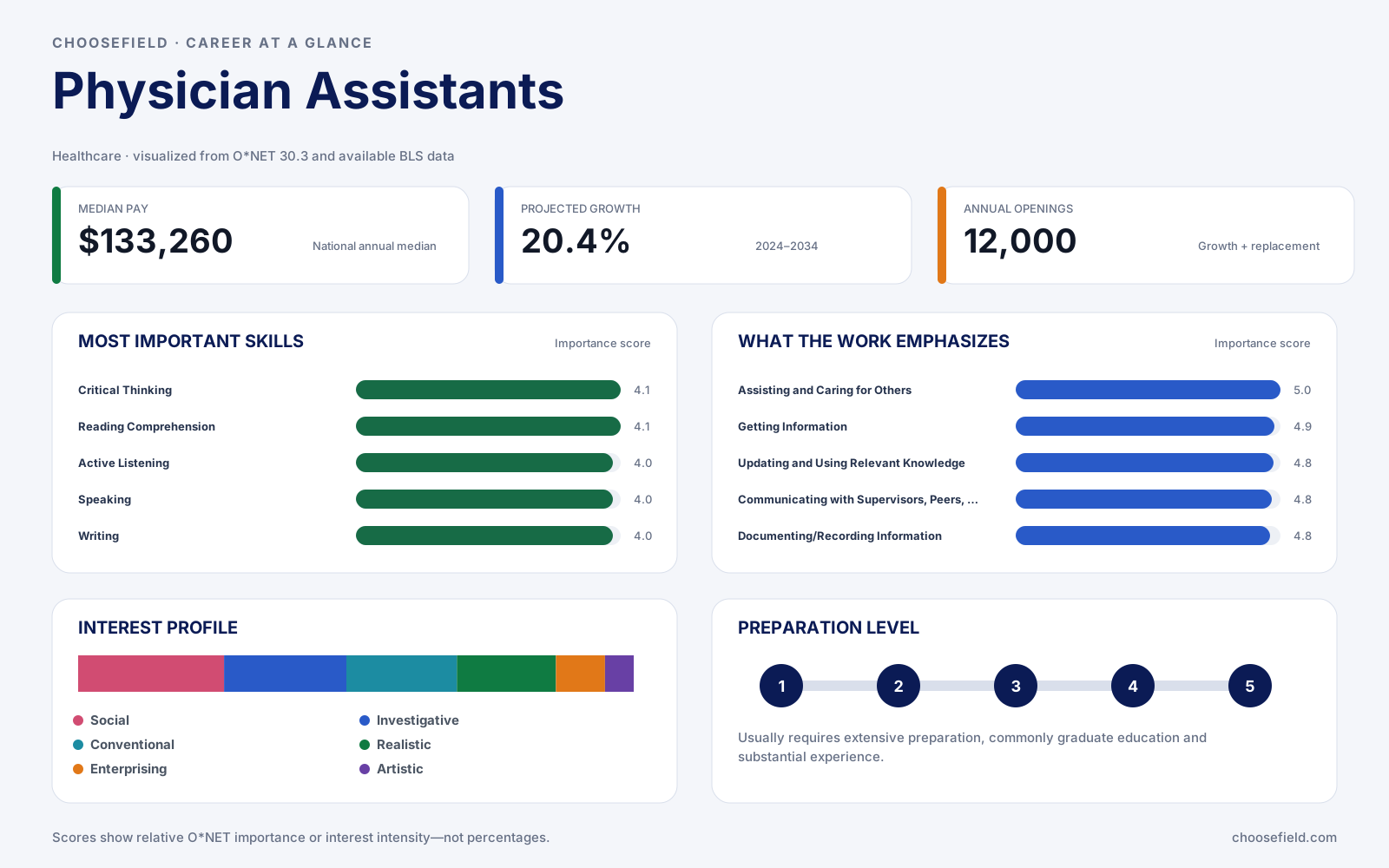
Visual summary of pay, outlook, skills, interests, and preparation for Physician Assistants

Median pay

$133,260
Median annual pay for Physician Assistants.
U.S. Bureau of Labor Statistics · 2024
View source ↗

10-year growth

20.4%
Projected employment growth from 2024 to 2034.
U.S. Bureau of Labor Statistics · 2024–2034 projections
View source ↗

Annual openings

12,000
Projected annual openings, including growth and replacement demand.
U.S. Bureau of Labor Statistics · 2024–2034 projections
View source ↗

Employment

162,700
Estimated U.S. employment for Physician Assistants in 2024.
U.S. Bureau of Labor Statistics · 2024
View source ↗

Jobs added or lost

+33,200
Projected numeric employment change from 2024 to 2034.
U.S. Bureau of Labor Statistics · 2024–2034 projections
View source ↗

Entry preparation

Master's degree
Typical education needed to enter Physician Assistants.
U.S. Bureau of Labor Statistics · 2024 profile
View source ↗
O*NET occupation profile

What the work involves

Strongest O*NET signals first.

Essential skills

  1. 1Critical Thinking
  2. 2Reading Comprehension
  3. 3Active Listening
  4. 4Speaking
  5. 5Writing
  6. 6Active Learning

Knowledge areas

  1. 1Medicine and Dentistry
  2. 2Biology
  3. 3English Language
  4. 4Psychology
  5. 5Therapy and Counseling
  6. 6Customer and Personal Service

Abilities

  1. 1Deductive Reasoning
  2. 2Inductive Reasoning
  3. 3Oral Comprehension
  4. 4Problem Sensitivity
  5. 5Information Ordering
  6. 6Oral Expression

Career interests

  1. 1Social
  2. 2Investigative
  3. 3Conventional
  4. 4Realistic
  5. 5Enterprising
  6. 6Artistic

Work styles

  1. 1Attention to Detail
  2. 2Dependability
  3. 3Integrity
  4. 4Cautiousness
  5. 5Cooperation
  6. 6Self-Control

Work activities

  1. 1Assisting and Caring for Others
  2. 2Getting Information
  3. 3Updating and Using Relevant Knowledge
  4. 4Communicating with Supervisors, Peers, or Subordinates
  5. 5Documenting/Recording Information
  6. 6Making Decisions and Solving Problems

Work context

  1. 1Face-to-Face Discussions with Individuals and Within Teams
  2. 2E-Mail
  3. 3Contact With Others
  4. 4Importance of Being Exact or Accurate
  5. 5Telephone Conversations
  6. 6Freedom to Make Decisions

Representative tasks

  • Make tentative diagnoses and decisions about management and treatment of patients.
  • Interpret diagnostic test results for deviations from normal.
  • Prescribe therapy or medication with physician approval.
  • Obtain, compile, and record patient medical data, including health history, progress notes, and results of physical examination.
  • Examine patients to obtain information about their physical condition.
  • Administer or order diagnostic tests, such as x-ray, electrocardiogram, and laboratory tests.
  • Instruct and counsel patients about prescribed therapeutic regimens, normal growth and development, family planning, emotional problems of daily living, and health maintenance.
  • Perform therapeutic procedures, such as injections, immunizations, suturing and wound care, and infection management.

Software and tools

Epic Systems · in demandMicrosoft Excel · hot technologyeClinicalWorks EHR software · hot technologyMicrosoft Word · hot technologyMEDITECH software · hot technologyMicrosoft Outlook · hot technologyMicrosoft Office software · hot technologyTeleconferencing softwarePatient records software for personal digital assistants PDAsPatient management softwareChartWare EMRMedical procedure coding software

Sources

BLS provides national pay, employment, and projections. O*NET provides skills, interests, preparation, tasks, work context, and tools.