CFChooseField
Healthcare

Occupational Therapists

Assess, plan, and organize rehabilitative programs that help build or restore vocational, homemaking, and daily living skills, as well as general independence, to persons with disabilities or developmental delays. Use therapeutic techniques, adapt the individual's environment, teach skills, and modify specific tasks that present barriers to the individual.
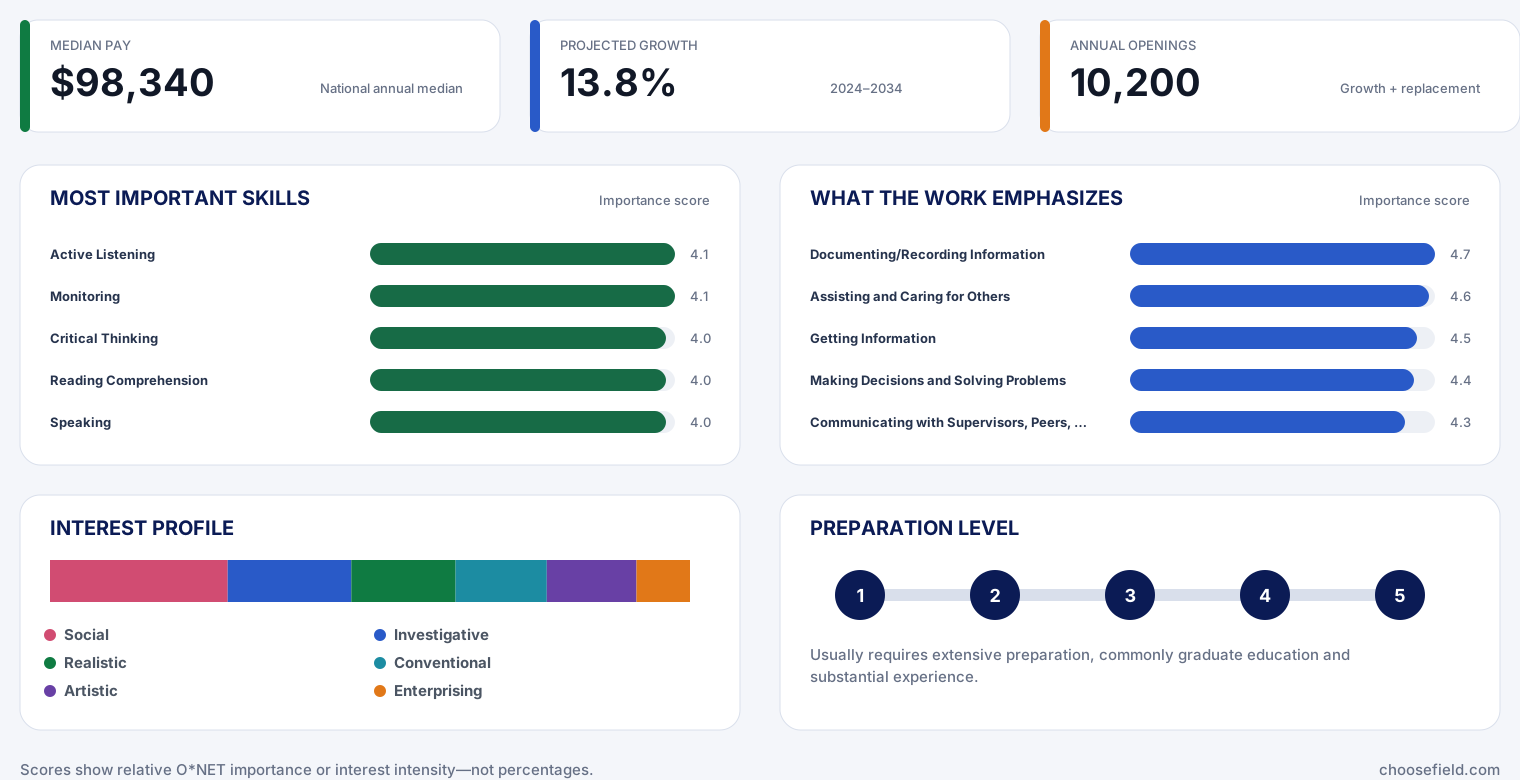
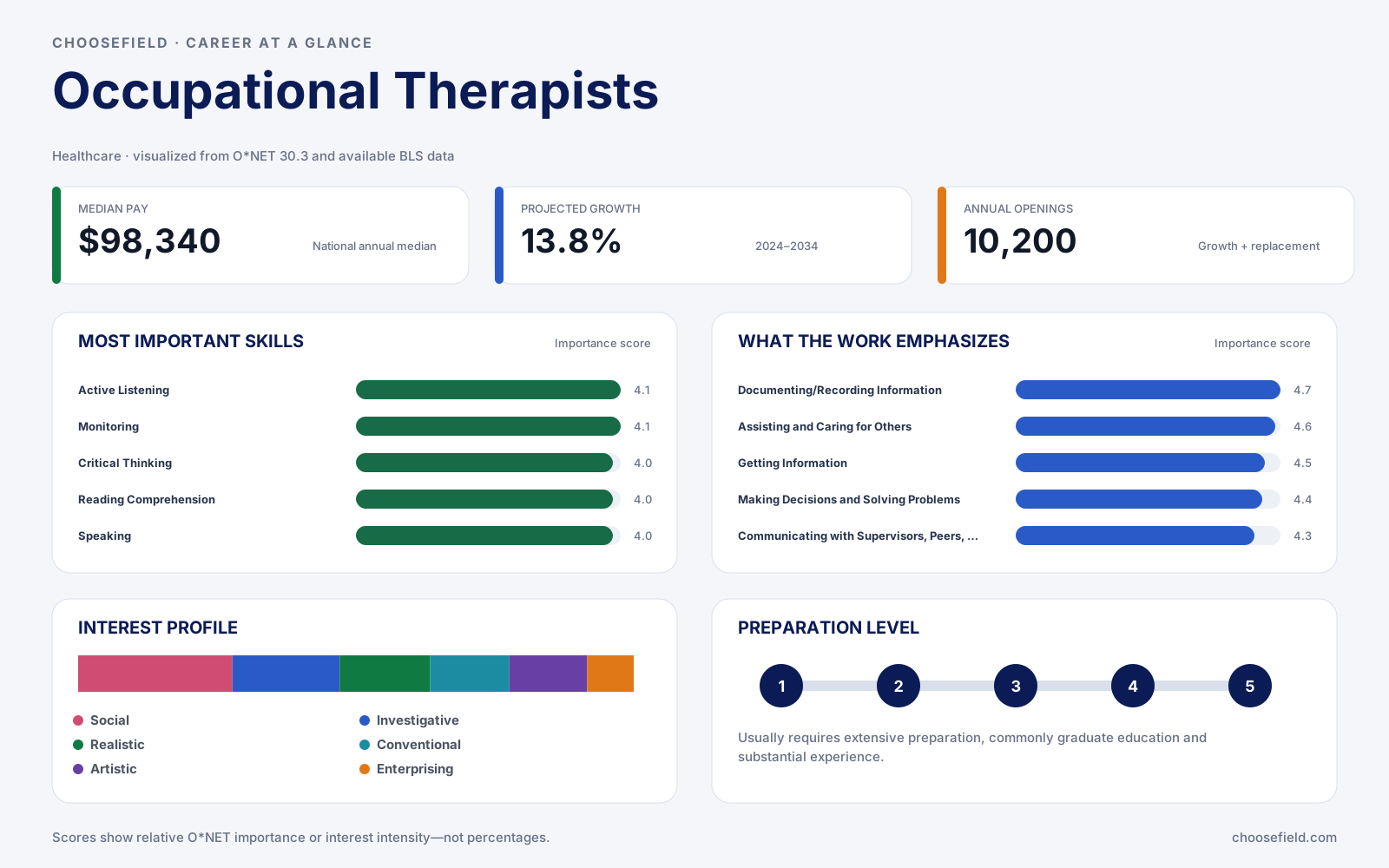
Visual summary of pay, outlook, skills, interests, and preparation for Occupational Therapists

Median pay

$98,340
Median annual pay for Occupational Therapists.
U.S. Bureau of Labor Statistics · 2024
View source ↗

10-year growth

13.8%
Projected employment growth from 2024 to 2034.
U.S. Bureau of Labor Statistics · 2024–2034 projections
View source ↗

Annual openings

10,200
Projected annual openings, including growth and replacement demand.
U.S. Bureau of Labor Statistics · 2024–2034 projections
View source ↗

Employment

160,000
Estimated U.S. employment for Occupational Therapists in 2024.
U.S. Bureau of Labor Statistics · 2024
View source ↗

Jobs added or lost

+22,100
Projected numeric employment change from 2024 to 2034.
U.S. Bureau of Labor Statistics · 2024–2034 projections
View source ↗

Entry preparation

Master's degree
Typical education needed to enter Occupational Therapists.
U.S. Bureau of Labor Statistics · 2024 profile
View source ↗
O*NET occupation profile

What the work involves

Strongest O*NET signals first.

Essential skills

  1. 1Active Listening
  2. 2Monitoring
  3. 3Critical Thinking
  4. 4Reading Comprehension
  5. 5Speaking
  6. 6Writing

Knowledge areas

  1. 1Therapy and Counseling
  2. 2Psychology
  3. 3Customer and Personal Service
  4. 4Medicine and Dentistry
  5. 5English Language
  6. 6Education and Training

Abilities

  1. 1Oral Expression
  2. 2Deductive Reasoning
  3. 3Inductive Reasoning
  4. 4Problem Sensitivity
  5. 5Written Expression
  6. 6Information Ordering

Career interests

  1. 1Social
  2. 2Investigative
  3. 3Realistic
  4. 4Conventional
  5. 5Artistic
  6. 6Enterprising

Work styles

  1. 1Empathy
  2. 2Cooperation
  3. 3Attention to Detail
  4. 4Dependability
  5. 5Social Orientation
  6. 6Adaptability

Work activities

  1. 1Documenting/Recording Information
  2. 2Assisting and Caring for Others
  3. 3Getting Information
  4. 4Making Decisions and Solving Problems
  5. 5Communicating with Supervisors, Peers, or Subordinates
  6. 6Developing Objectives and Strategies

Work context

  1. 1Face-to-Face Discussions with Individuals and Within Teams
  2. 2Contact With Others
  3. 3E-Mail
  4. 4Indoors, Environmentally Controlled
  5. 5Determine Tasks, Priorities and Goals
  6. 6Physical Proximity

Representative tasks

  • Test and evaluate patients' physical and mental abilities and analyze medical data to determine realistic rehabilitation goals for patients.
  • Complete and maintain necessary records.
  • Plan, organize, and conduct occupational therapy programs in hospital, institutional, or community settings to help rehabilitate persons with disabilities because of illness, injury or psychological or developmental problems.
  • Plan and implement programs and social activities to help patients learn work or school skills and adjust to handicaps.
  • Select activities that will help individuals learn work and life-management skills within limits of their mental or physical capabilities.
  • Evaluate patients' progress and prepare reports that detail progress.
  • Train caregivers in providing for the needs of a patient during and after therapy.
  • Lay out materials such as puzzles, scissors and eating utensils for use in therapy, and clean and repair these tools after therapy sessions.

Software and tools

Microsoft Office software · hot technologyMicrosoft Excel · hot technologyFacebook · hot technologyeClinicalWorks EHR software · hot technologyMicrosoft Word · hot technologySynapse Adaptive Connect OutloudSpecial education educational softwareTactile graphic production kits softwareMusic softwareScreen reader softwareScreen magnification softwareScience educational software

Sources

BLS provides national pay, employment, and projections. O*NET provides skills, interests, preparation, tasks, work context, and tools.