CFChooseField
Public Safety

Firefighters

Control and extinguish fires or respond to emergency situations where life, property, or the environment is at risk. Duties may include fire prevention, emergency medical service, hazardous material response, search and rescue, and disaster assistance.
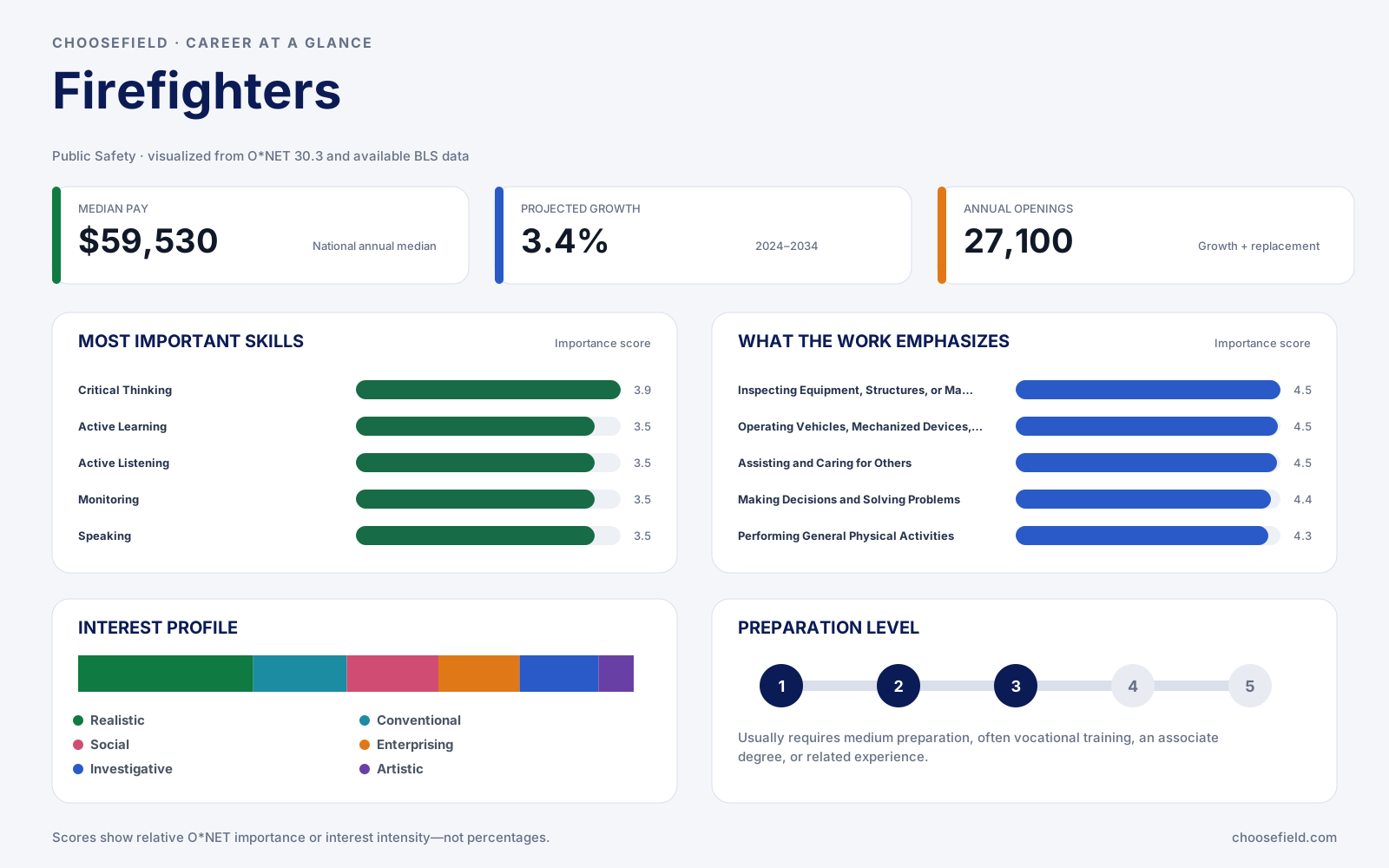
Visual summary of pay, outlook, skills, interests, and preparation for Firefighters

Median pay

$59,530
Median annual pay for Firefighters.
U.S. Bureau of Labor Statistics · 2024
View source ↗

10-year growth

3.4%
Projected employment growth from 2024 to 2034.
U.S. Bureau of Labor Statistics · 2024–2034 projections
View source ↗

Annual openings

27,100
Projected annual openings, including growth and replacement demand.
U.S. Bureau of Labor Statistics · 2024–2034 projections
View source ↗

Employment

344,900
Estimated U.S. employment for Firefighters in 2024.
U.S. Bureau of Labor Statistics · 2024
View source ↗

Jobs added or lost

+11,800
Projected numeric employment change from 2024 to 2034.
U.S. Bureau of Labor Statistics · 2024–2034 projections
View source ↗

Entry preparation

Postsecondary nondegree award
Typical additional preparation: Long-term on-the-job training.
U.S. Bureau of Labor Statistics · 2024 profile
View source ↗
O*NET occupation profile

What the work involves

Strongest O*NET signals first.

Essential skills

  1. 1Critical Thinking
  2. 2Active Learning
  3. 3Active Listening
  4. 4Monitoring
  5. 5Speaking
  6. 6Reading Comprehension

Knowledge areas

  1. 1Public Safety and Security
  2. 2Customer and Personal Service
  3. 3Education and Training
  4. 4Building and Construction
  5. 5English Language
  6. 6Mechanical

Abilities

  1. 1Problem Sensitivity
  2. 2Oral Comprehension
  3. 3Arm-Hand Steadiness
  4. 4Deductive Reasoning
  5. 5Far Vision
  6. 6Oral Expression

Career interests

  1. 1Realistic
  2. 2Conventional
  3. 3Social
  4. 4Enterprising
  5. 5Investigative
  6. 6Artistic

Work styles

  1. 1Self-Control
  2. 2Stress Tolerance
  3. 3Dependability
  4. 4Cooperation
  5. 5Adaptability
  6. 6Integrity

Work activities

  1. 1Inspecting Equipment, Structures, or Materials
  2. 2Operating Vehicles, Mechanized Devices, or Equipment
  3. 3Assisting and Caring for Others
  4. 4Making Decisions and Solving Problems
  5. 5Performing General Physical Activities
  6. 6Getting Information

Work context

  1. 1Face-to-Face Discussions with Individuals and Within Teams
  2. 2Contact With Others
  3. 3Work With or Contribute to a Work Group or Team
  4. 4Physical Proximity
  5. 5Wear Common Protective or Safety Equipment such as Safety Shoes, Glasses, Gloves, Hearing Protection, Hard Hats, or Life Jackets
  6. 6Deal With External Customers or the Public in General

Representative tasks

  • Rescue survivors from burning buildings, accident sites, and water hazards.
  • Dress with equipment such as fire-resistant clothing and breathing apparatus.
  • Assess fires and situations and report conditions to superiors to receive instructions, using two-way radios.
  • Move toward the source of a fire, using knowledge of types of fires, construction design, building materials, and physical layout of properties.
  • Respond to fire alarms and other calls for assistance, such as automobile and industrial accidents.
  • Create openings in buildings for ventilation or entrance, using axes, chisels, crowbars, electric saws, or core cutters.
  • Drive and operate fire fighting vehicles and equipment.
  • Inspect fire sites after flames have been extinguished to ensure that there is no further danger.

Software and tools

Microsoft Access · hot technologyMicrosoft Excel · hot technologyMicrosoft Office software · hot technologyMicrosoft Outlook · hot technologyMicrosoft PowerPoint · hot technologyMicrosoft Windows · hot technologyMicrosoft Word · hot technologyAffiliated Computer Services ACS FIREHOUSECorel WordPerfect Office SuiteEmail softwareFire incident reporting systemsGeographic information system GIS software

Sources

BLS provides national pay, employment, and projections. O*NET provides skills, interests, preparation, tasks, work context, and tools.