CFChooseField
Healthcare

Diagnostic Medical Sonographers

Produce ultrasonic recordings of internal organs for use by physicians. Includes vascular technologists.
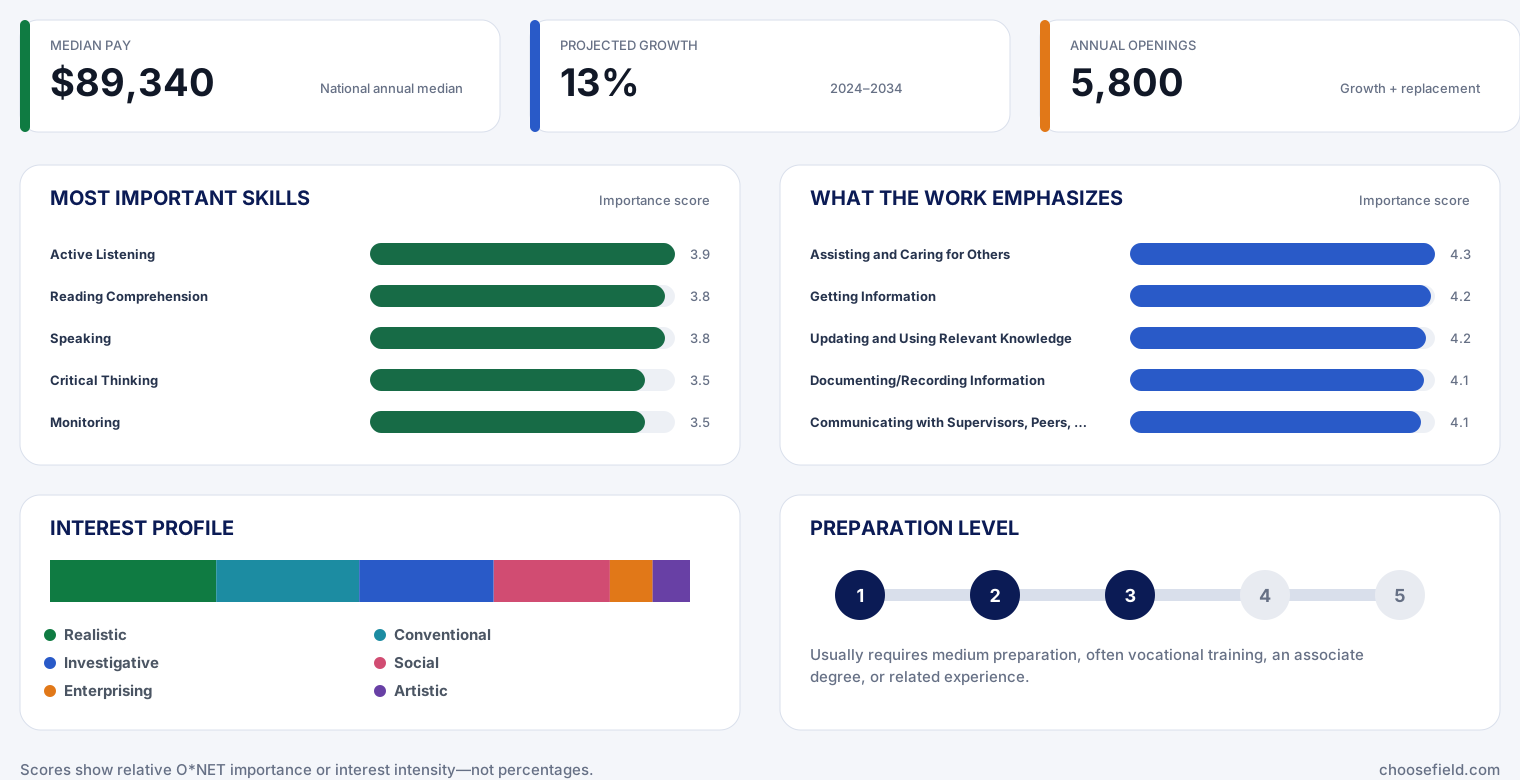
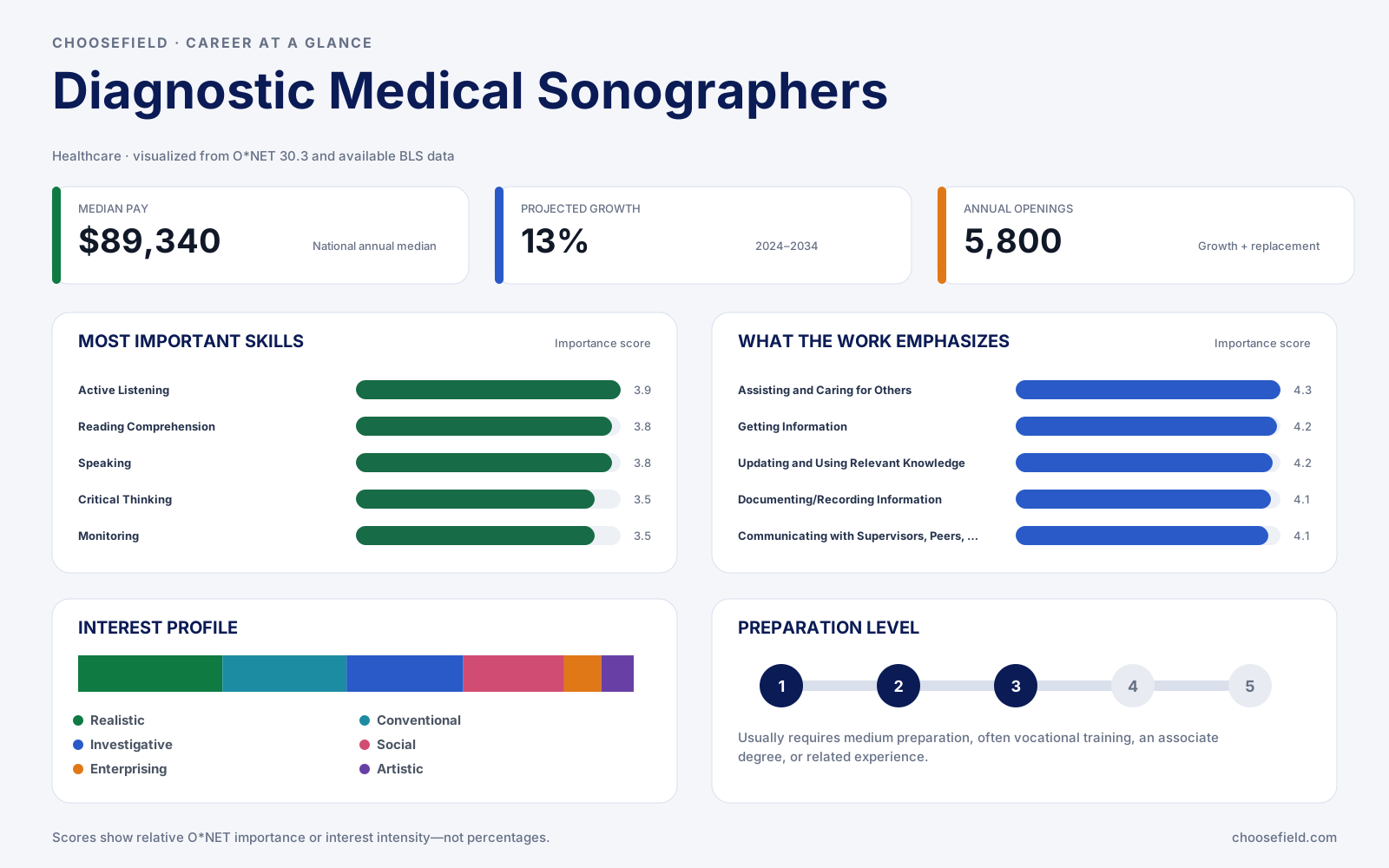
Visual summary of pay, outlook, skills, interests, and preparation for Diagnostic Medical Sonographers

Median pay

$89,340
Median annual pay for Diagnostic Medical Sonographers.
U.S. Bureau of Labor Statistics · 2024
View source ↗

10-year growth

13%
Projected employment growth from 2024 to 2034.
U.S. Bureau of Labor Statistics · 2024–2034 projections
View source ↗

Annual openings

5,800
Projected annual openings, including growth and replacement demand.
U.S. Bureau of Labor Statistics · 2024–2034 projections
View source ↗

Employment

90,000
Estimated U.S. employment for Diagnostic Medical Sonographers in 2024.
U.S. Bureau of Labor Statistics · 2024
View source ↗

Jobs added or lost

+11,700
Projected numeric employment change from 2024 to 2034.
U.S. Bureau of Labor Statistics · 2024–2034 projections
View source ↗

Entry preparation

Associate's degree
Typical education needed to enter Diagnostic Medical Sonographers.
U.S. Bureau of Labor Statistics · 2024 profile
View source ↗
O*NET occupation profile

What the work involves

Strongest O*NET signals first.

Essential skills

  1. 1Active Listening
  2. 2Reading Comprehension
  3. 3Speaking
  4. 4Critical Thinking
  5. 5Monitoring
  6. 6Active Learning

Knowledge areas

  1. 1Customer and Personal Service
  2. 2English Language
  3. 3Physics
  4. 4Medicine and Dentistry
  5. 5Administrative
  6. 6Computers and Electronics

Abilities

  1. 1Oral Comprehension
  2. 2Near Vision
  3. 3Oral Expression
  4. 4Problem Sensitivity
  5. 5Written Comprehension
  6. 6Written Expression

Career interests

  1. 1Realistic
  2. 2Conventional
  3. 3Investigative
  4. 4Social
  5. 5Enterprising
  6. 6Artistic

Work styles

  1. 1Attention to Detail
  2. 2Dependability
  3. 3Cautiousness
  4. 4Cooperation
  5. 5Integrity
  6. 6Empathy

Work activities

  1. 1Assisting and Caring for Others
  2. 2Getting Information
  3. 3Updating and Using Relevant Knowledge
  4. 4Documenting/Recording Information
  5. 5Communicating with Supervisors, Peers, or Subordinates
  6. 6Working with Computers

Work context

  1. 1Importance of Being Exact or Accurate
  2. 2Contact With Others
  3. 3Physical Proximity
  4. 4Spend Time Using Your Hands to Handle, Control, or Feel Objects, Tools, or Controls
  5. 5Spend Time Making Repetitive Motions
  6. 6Indoors, Environmentally Controlled

Representative tasks

  • Observe screen during scan to ensure that image produced is satisfactory for diagnostic purposes, making adjustments to equipment as required.
  • Observe and care for patients throughout examinations to ensure their safety and comfort.
  • Provide sonogram and oral or written summary of technical findings to physician for use in medical diagnosis.
  • Select appropriate equipment settings and adjust patient positions to obtain the best sites and angles.
  • Operate ultrasound equipment to produce and record images of the motion, shape, and composition of blood, organs, tissues, or bodily masses, such as fluid accumulations.
  • Decide which images to include, looking for differences between healthy and pathological areas.
  • Prepare patient for exam by explaining procedure, transferring patient to ultrasound table, scrubbing skin and applying gel, and positioning patient properly.
  • Determine whether scope of exam should be extended, based on findings.

Software and tools

eClinicalWorks EHR software · hot technologyMEDITECH software · hot technologyMicrosoft Excel · hot technologyMicrosoft Office software · hot technologyDatabase softwareEmail softwareMedical procedure coding softwarePatient medical record software

Sources

BLS provides national pay, employment, and projections. O*NET provides skills, interests, preparation, tasks, work context, and tools.