CFChooseField
Technology and Mathematics

Data Scientists

Develop and implement a set of techniques or analytics applications to transform raw data into meaningful information using data-oriented programming languages and visualization software. Apply data mining, data modeling, natural language processing, and machine learning to extract and analyze information from large structured and unstructured datasets. Visualize, interpret, and report data findings. May create dynamic data reports.
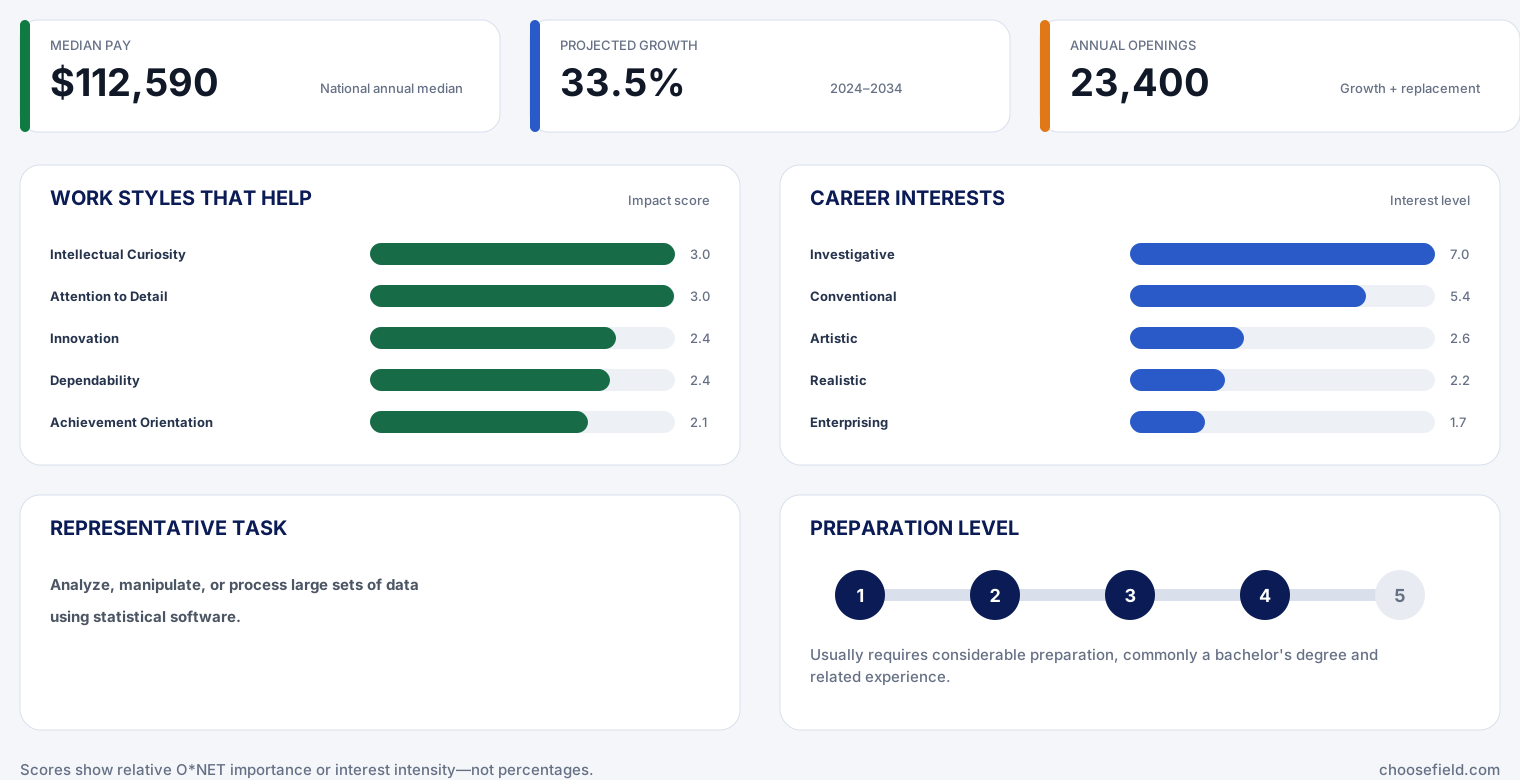
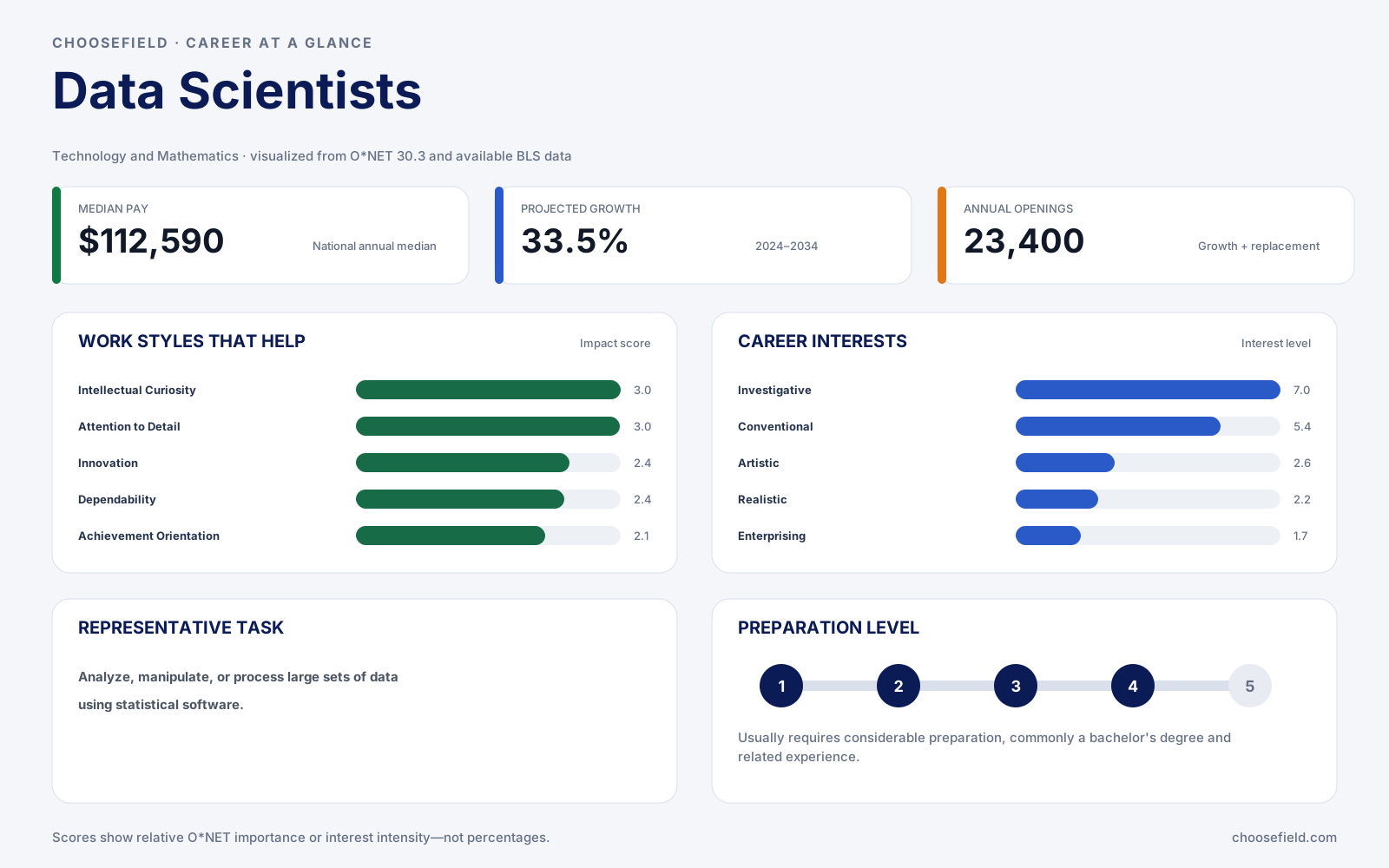
Visual summary of pay, outlook, skills, interests, and preparation for Data Scientists

Median pay

$112,590
Median annual pay for Data Scientists.
U.S. Bureau of Labor Statistics · 2024
View source ↗

10-year growth

33.5%
Projected employment growth from 2024 to 2034.
U.S. Bureau of Labor Statistics · 2024–2034 projections
View source ↗

Annual openings

23,400
Projected annual openings, including growth and replacement demand.
U.S. Bureau of Labor Statistics · 2024–2034 projections
View source ↗

Employment

245,900
Estimated U.S. employment for Data Scientists in 2024.
U.S. Bureau of Labor Statistics · 2024
View source ↗

Jobs added or lost

+82,500
Projected numeric employment change from 2024 to 2034.
U.S. Bureau of Labor Statistics · 2024–2034 projections
View source ↗

Entry preparation

Bachelor's degree
Typical education needed to enter Data Scientists.
U.S. Bureau of Labor Statistics · 2024 profile
View source ↗
O*NET occupation profile

What the work involves

Strongest O*NET signals first.

Career interests

  1. 1Investigative
  2. 2Conventional
  3. 3Artistic
  4. 4Realistic
  5. 5Enterprising
  6. 6Social

Work styles

  1. 1Intellectual Curiosity
  2. 2Attention to Detail
  3. 3Innovation
  4. 4Dependability
  5. 5Achievement Orientation
  6. 6Integrity

Representative tasks

  • Analyze, manipulate, or process large sets of data using statistical software.
  • Apply feature selection algorithms to models predicting outcomes of interest, such as sales, attrition, and healthcare use.
  • Apply sampling techniques to determine groups to be surveyed or use complete enumeration methods.
  • Clean and manipulate raw data using statistical software.
  • Compare models using statistical performance metrics, such as loss functions or proportion of explained variance.
  • Create graphs, charts, or other visualizations to convey the results of data analysis using specialized software.
  • Deliver oral or written presentations of the results of mathematical modeling and data analysis to management or other end users.
  • Design surveys, opinion polls, or other instruments to collect data.

Software and tools

R · in demandPyTorch · in demandGit · in demandMicrosoft Azure software · in demandMicrosoft Excel · in demandC++ · in demandMicrosoft Power BI · in demandMicrosoft PowerPoint · in demandSAS · in demandApache Spark · in demandTableau · in demandStructured query language SQL · in demand

Sources

BLS provides national pay, employment, and projections. O*NET provides skills, interests, preparation, tasks, work context, and tools.