CFChooseField
Engineering and Architecture

Civil Engineers

Perform engineering duties in planning, designing, and overseeing construction and maintenance of building structures and facilities, such as roads, railroads, airports, bridges, harbors, channels, dams, irrigation projects, pipelines, power plants, and water and sewage systems.
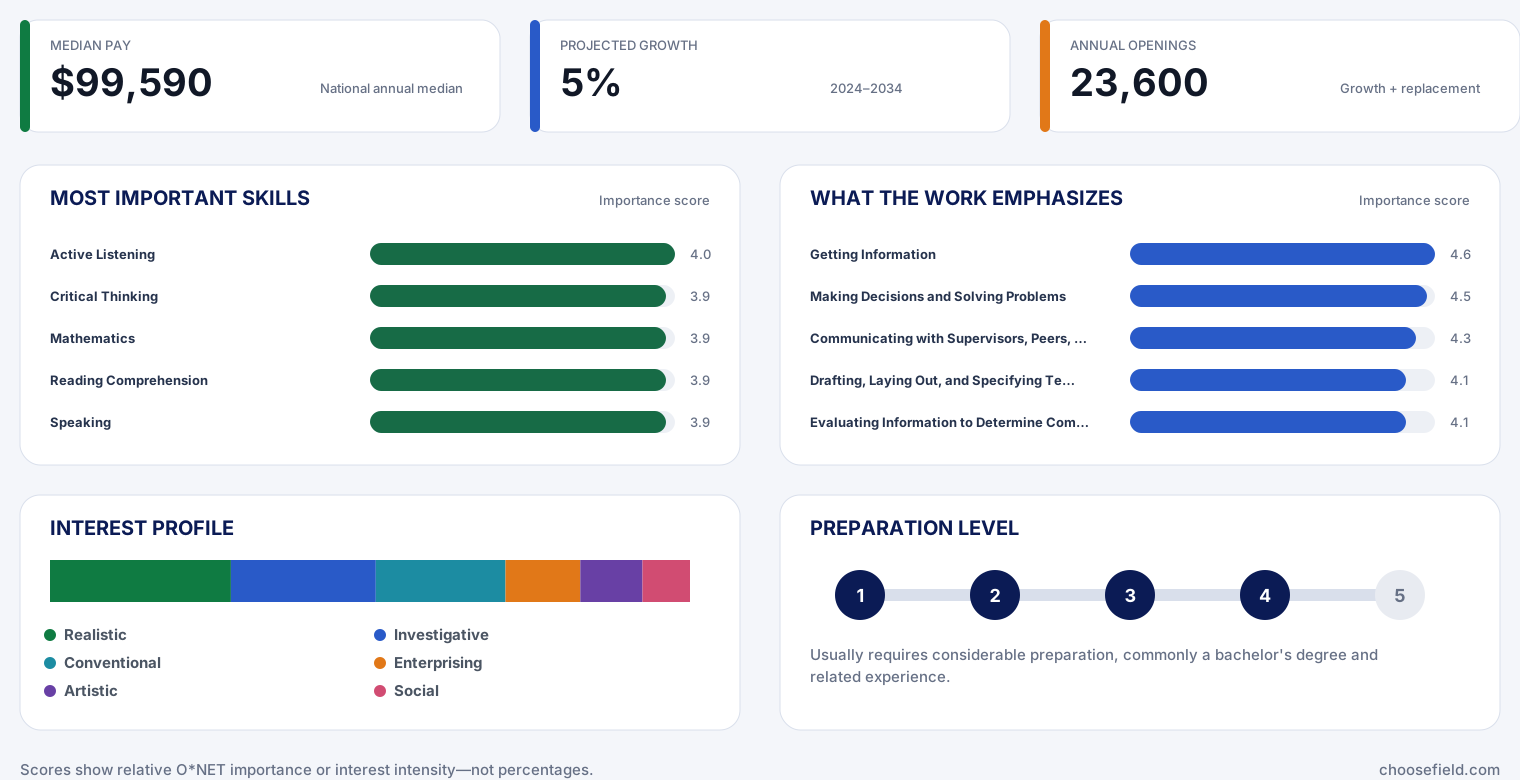
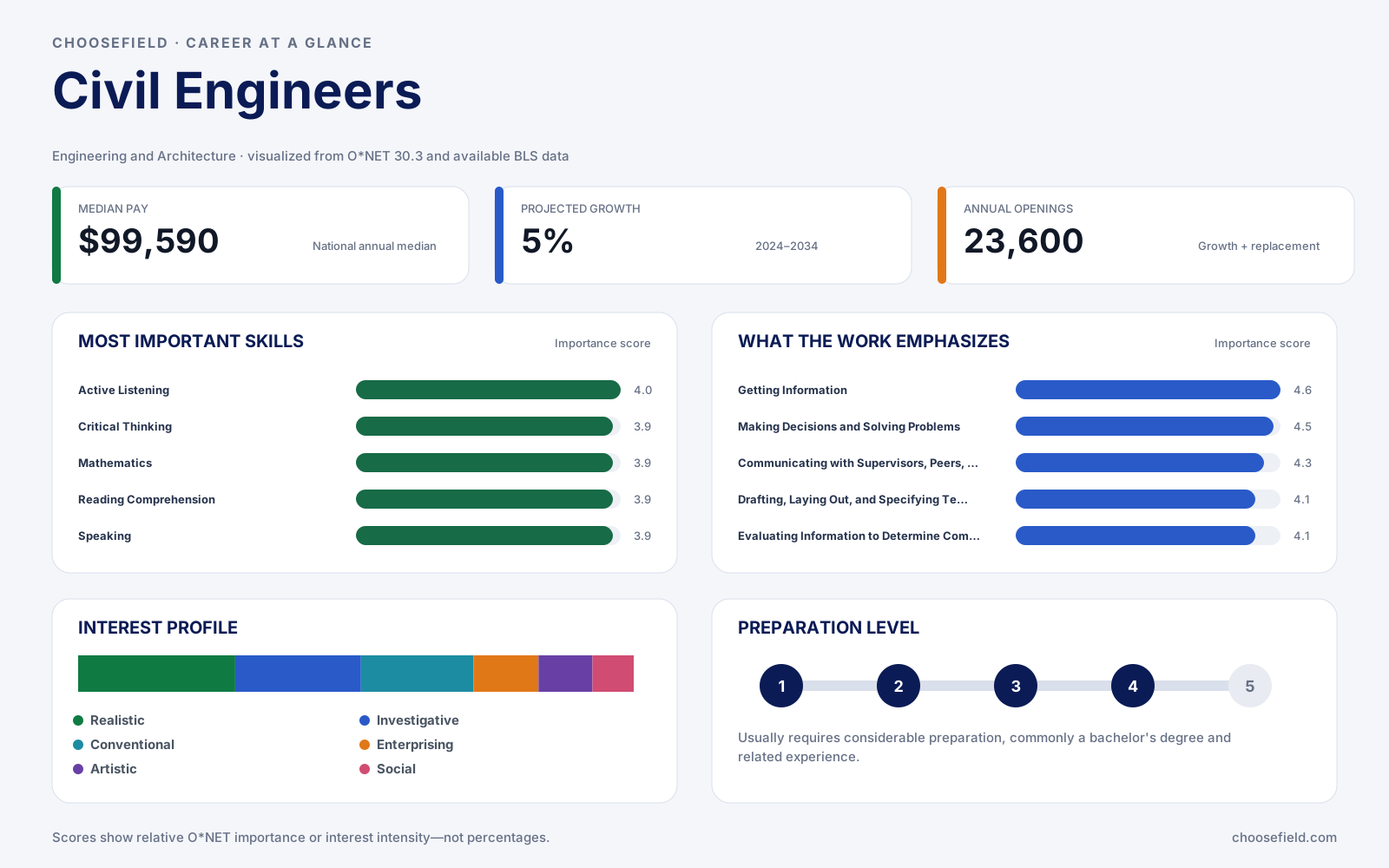
Visual summary of pay, outlook, skills, interests, and preparation for Civil Engineers

Median pay

$99,590
Median annual pay for Civil Engineers.
U.S. Bureau of Labor Statistics · 2024
View source ↗

10-year growth

5%
Projected employment growth from 2024 to 2034.
U.S. Bureau of Labor Statistics · 2024–2034 projections
View source ↗

Annual openings

23,600
Projected annual openings, including growth and replacement demand.
U.S. Bureau of Labor Statistics · 2024–2034 projections
View source ↗

Employment

368,900
Estimated U.S. employment for Civil Engineers in 2024.
U.S. Bureau of Labor Statistics · 2024
View source ↗

Jobs added or lost

+18,500
Projected numeric employment change from 2024 to 2034.
U.S. Bureau of Labor Statistics · 2024–2034 projections
View source ↗

Entry preparation

Bachelor's degree
Typical education needed to enter Civil Engineers.
U.S. Bureau of Labor Statistics · 2024 profile
View source ↗
O*NET occupation profile

What the work involves

Strongest O*NET signals first.

Essential skills

  1. 1Active Listening
  2. 2Critical Thinking
  3. 3Mathematics
  4. 4Reading Comprehension
  5. 5Speaking
  6. 6Science

Knowledge areas

  1. 1Design
  2. 2Engineering and Technology
  3. 3Building and Construction
  4. 4Mathematics
  5. 5English Language
  6. 6Physics

Abilities

  1. 1Deductive Reasoning
  2. 2Inductive Reasoning
  3. 3Oral Comprehension
  4. 4Oral Expression
  5. 5Problem Sensitivity
  6. 6Written Comprehension

Career interests

  1. 1Realistic
  2. 2Investigative
  3. 3Conventional
  4. 4Enterprising
  5. 5Artistic
  6. 6Social

Work styles

  1. 1Dependability
  2. 2Attention to Detail
  3. 3Cautiousness
  4. 4Integrity
  5. 5Intellectual Curiosity
  6. 6Achievement Orientation

Work activities

  1. 1Getting Information
  2. 2Making Decisions and Solving Problems
  3. 3Communicating with Supervisors, Peers, or Subordinates
  4. 4Drafting, Laying Out, and Specifying Technical Devices, Parts, and Equipment
  5. 5Evaluating Information to Determine Compliance with Standards
  6. 6Updating and Using Relevant Knowledge

Work context

  1. 1E-Mail
  2. 2Telephone Conversations
  3. 3Face-to-Face Discussions with Individuals and Within Teams
  4. 4Indoors, Environmentally Controlled
  5. 5Importance of Being Exact or Accurate
  6. 6Work With or Contribute to a Work Group or Team

Representative tasks

  • Direct engineering activities, ensuring compliance with environmental, safety, or other governmental regulations.
  • Manage and direct the construction, operations, or maintenance activities at project site.
  • Inspect project sites to monitor progress and ensure conformance to design specifications and safety or sanitation standards.
  • Compute load and grade requirements, water flow rates, or material stress factors to determine design specifications.
  • Plan and design transportation or hydraulic systems or structures, using computer-assisted design or drawing tools.
  • Provide technical advice to industrial or managerial personnel regarding design, construction, program modifications, or structural repairs.
  • Analyze survey reports, maps, drawings, blueprints, aerial photography, or other topographical or geologic data.
  • Direct or participate in surveying to lay out installations or establish reference points, grades, or elevations to guide construction.

Software and tools

Microsoft Outlook · in demandMicrosoft PowerPoint · in demandAutodesk AutoCAD · in demandAutodesk AutoCAD Civil 3D · in demandMicrosoft Excel · in demandAutodesk Revit · in demandMicrosoft Office software · in demandBentley MicroStation · in demandDassault Systemes SolidWorks · hot technologyMicrosoft Access · hot technologyESRI ArcGIS software · hot technologySAP software · hot technology

Sources

BLS provides national pay, employment, and projections. O*NET provides skills, interests, preparation, tasks, work context, and tools.