CFChooseField
Engineering and Architecture

Chemical Engineers

Design chemical plant equipment and devise processes for manufacturing chemicals and products, such as gasoline, synthetic rubber, plastics, detergents, cement, paper, and pulp, by applying principles and technology of chemistry, physics, and engineering.
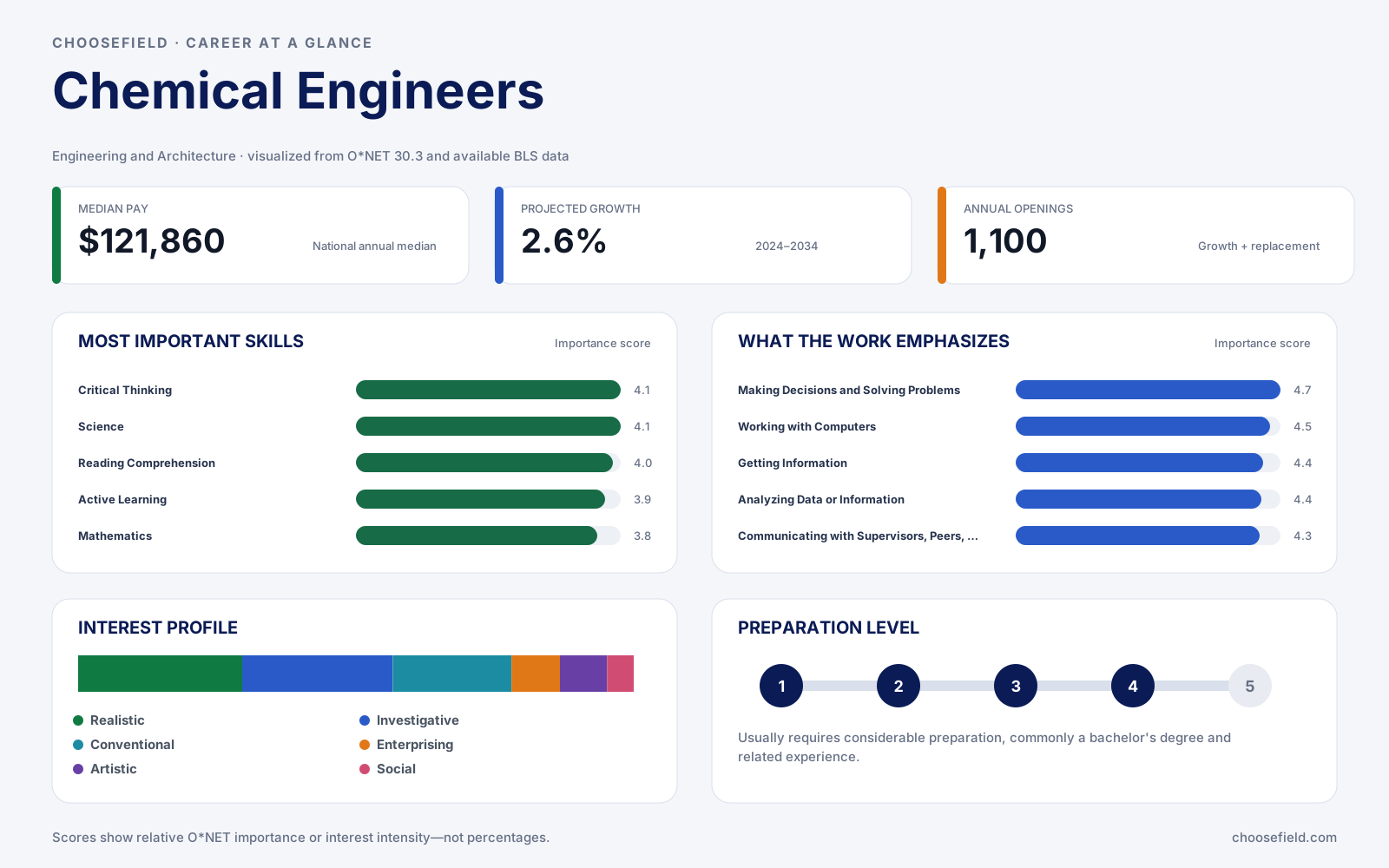
Visual summary of pay, outlook, skills, interests, and preparation for Chemical Engineers

Median pay

$121,860
Median annual pay for Chemical Engineers.
U.S. Bureau of Labor Statistics · 2024
View source ↗

10-year growth

2.6%
Projected employment growth from 2024 to 2034.
U.S. Bureau of Labor Statistics · 2024–2034 projections
View source ↗

Annual openings

1,100
Projected annual openings, including growth and replacement demand.
U.S. Bureau of Labor Statistics · 2024–2034 projections
View source ↗

Employment

21,600
Estimated U.S. employment for Chemical Engineers in 2024.
U.S. Bureau of Labor Statistics · 2024
View source ↗

Jobs added or lost

+600
Projected numeric employment change from 2024 to 2034.
U.S. Bureau of Labor Statistics · 2024–2034 projections
View source ↗

Entry preparation

Bachelor's degree
Typical education needed to enter Chemical Engineers.
U.S. Bureau of Labor Statistics · 2024 profile
View source ↗
O*NET occupation profile

What the work involves

Strongest O*NET signals first.

Essential skills

  1. 1Critical Thinking
  2. 2Science
  3. 3Reading Comprehension
  4. 4Active Learning
  5. 5Mathematics
  6. 6Speaking

Knowledge areas

  1. 1Engineering and Technology
  2. 2Chemistry
  3. 3Mathematics
  4. 4Design
  5. 5Physics
  6. 6Production and Processing

Abilities

  1. 1Category Flexibility
  2. 2Deductive Reasoning
  3. 3Inductive Reasoning
  4. 4Information Ordering
  5. 5Oral Comprehension
  6. 6Oral Expression

Career interests

  1. 1Realistic
  2. 2Investigative
  3. 3Conventional
  4. 4Enterprising
  5. 5Artistic
  6. 6Social

Work styles

  1. 1Attention to Detail
  2. 2Cautiousness
  3. 3Dependability
  4. 4Innovation
  5. 5Intellectual Curiosity
  6. 6Achievement Orientation

Work activities

  1. 1Making Decisions and Solving Problems
  2. 2Working with Computers
  3. 3Getting Information
  4. 4Analyzing Data or Information
  5. 5Communicating with Supervisors, Peers, or Subordinates
  6. 6Monitoring Processes, Materials, or Surroundings

Work context

  1. 1E-Mail
  2. 2Face-to-Face Discussions with Individuals and Within Teams
  3. 3Indoors, Environmentally Controlled
  4. 4Telephone Conversations
  5. 5Work With or Contribute to a Work Group or Team
  6. 6Health and Safety of Other Workers

Representative tasks

  • Develop safety procedures to be employed by workers operating equipment or working in close proximity to ongoing chemical reactions.
  • Troubleshoot problems with chemical manufacturing processes.
  • Monitor and analyze data from processes and experiments.
  • Evaluate chemical equipment and processes to identify ways to optimize performance or to ensure compliance with safety and environmental regulations.
  • Design and plan layout of equipment.
  • Prepare estimate of production costs and production progress reports for management.
  • Perform tests and monitor performance of processes throughout stages of production to determine degree of control over variables such as temperature, density, specific gravity, and pressure.
  • Conduct research to develop new and improved chemical manufacturing processes.

Software and tools

Autodesk AutoCAD · in demandMicrosoft PowerPoint · in demandMicrosoft Office software · in demandMicrosoft Excel · in demandSAP software · hot technologyMicrosoft Word · hot technologyDassault Systemes SolidWorks · hot technologyMicrosoft Project · hot technologyR · hot technologyMicrosoft Visual Basic · hot technologyMicrosoft Visio · hot technologyC++ · hot technology

Sources

BLS provides national pay, employment, and projections. O*NET provides skills, interests, preparation, tasks, work context, and tools.