CFChooseField
Engineering and Architecture

Architects, Except Landscape and Naval

Plan and design structures, such as private residences, office buildings, theaters, factories, and other structural property.
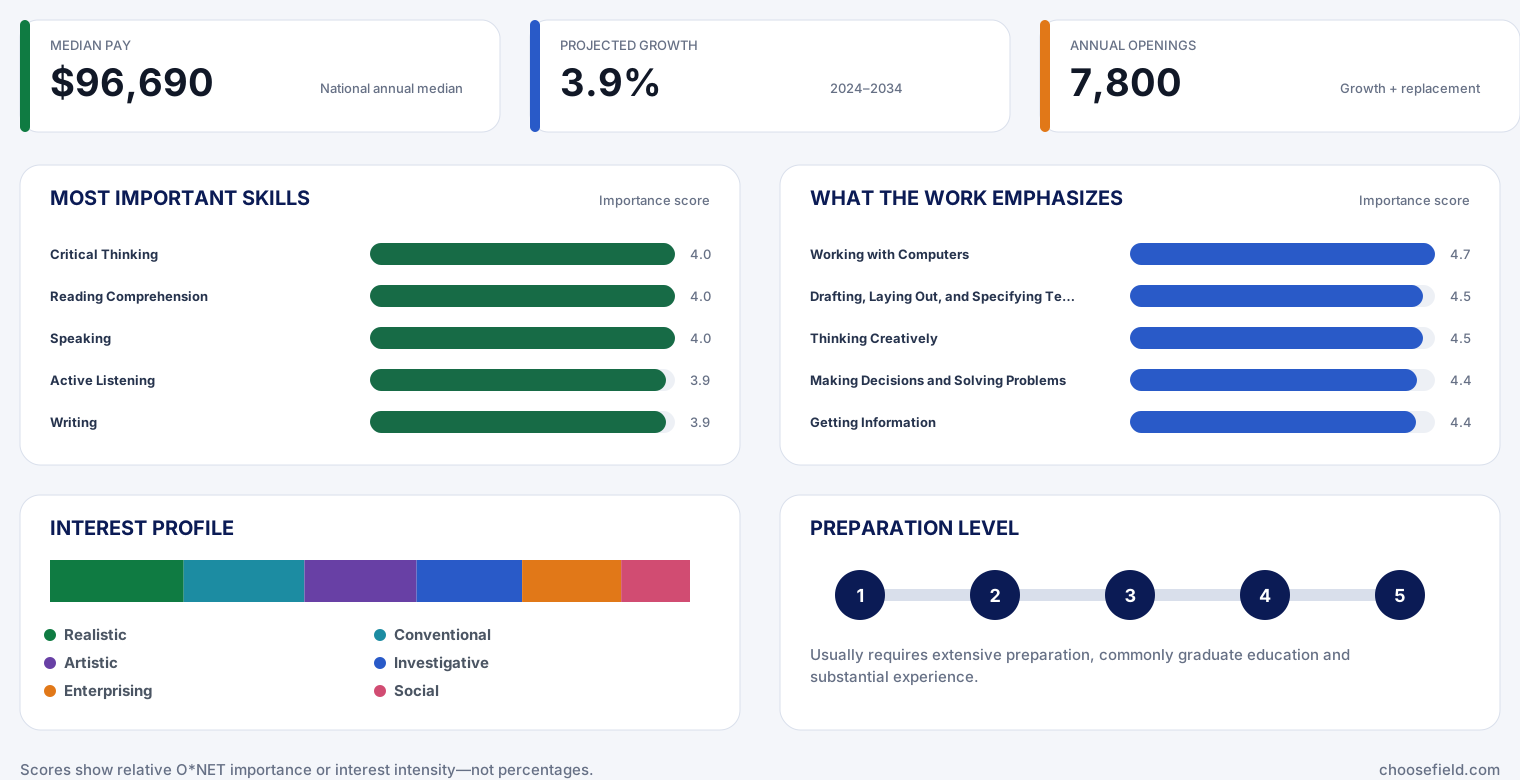
Visual summary of pay, outlook, skills, interests, and preparation for Architects, Except Landscape and Naval

Median pay

$96,690
Median annual pay for Architects, Except Landscape and Naval.
U.S. Bureau of Labor Statistics · 2024
View source ↗

10-year growth

3.9%
Projected employment growth from 2024 to 2034.
U.S. Bureau of Labor Statistics · 2024–2034 projections
View source ↗

Annual openings

7,800
Projected annual openings, including growth and replacement demand.
U.S. Bureau of Labor Statistics · 2024–2034 projections
View source ↗

Employment

123,600
Estimated U.S. employment for Architects, Except Landscape and Naval in 2024.
U.S. Bureau of Labor Statistics · 2024
View source ↗

Jobs added or lost

+4,800
Projected numeric employment change from 2024 to 2034.
U.S. Bureau of Labor Statistics · 2024–2034 projections
View source ↗

Entry preparation

Bachelor's degree
Typical additional preparation: Internship/residency.
U.S. Bureau of Labor Statistics · 2024 profile
View source ↗
O*NET occupation profile

What the work involves

Strongest O*NET signals first.

Essential skills

  1. 1Critical Thinking
  2. 2Reading Comprehension
  3. 3Speaking
  4. 4Active Listening
  5. 5Writing
  6. 6Monitoring

Knowledge areas

  1. 1Design
  2. 2Building and Construction
  3. 3Public Safety and Security
  4. 4Engineering and Technology
  5. 5Computers and Electronics
  6. 6English Language

Abilities

  1. 1Visualization
  2. 2Category Flexibility
  3. 3Deductive Reasoning
  4. 4Fluency of Ideas
  5. 5Inductive Reasoning
  6. 6Information Ordering

Career interests

  1. 1Realistic
  2. 2Conventional
  3. 3Artistic
  4. 4Investigative
  5. 5Enterprising
  6. 6Social

Work styles

  1. 1Attention to Detail
  2. 2Dependability
  3. 3Innovation
  4. 4Intellectual Curiosity
  5. 5Achievement Orientation
  6. 6Cautiousness

Work activities

  1. 1Working with Computers
  2. 2Drafting, Laying Out, and Specifying Technical Devices, Parts, and Equipment
  3. 3Thinking Creatively
  4. 4Making Decisions and Solving Problems
  5. 5Getting Information
  6. 6Documenting/Recording Information

Work context

  1. 1E-Mail
  2. 2Telephone Conversations
  3. 3Face-to-Face Discussions with Individuals and Within Teams
  4. 4Work With or Contribute to a Work Group or Team
  5. 5Contact With Others
  6. 6Spend Time Sitting

Representative tasks

  • Develop final construction plans that include aesthetic representations of the structure or details for its construction.
  • Prepare scale drawings or architectural designs, using computer-aided design or other tools.
  • Prepare information regarding design, structure specifications, materials, color, equipment, estimated costs, or construction time.
  • Consult with clients to determine functional or spatial requirements of structures.
  • Meet with clients to review or discuss architectural drawings.
  • Monitor the work of specialists, such as electrical engineers, mechanical engineers, interior designers, or sound specialists to ensure optimal form or function of designs or final structures.
  • Integrate engineering elements into unified architectural designs.
  • Plan layouts of structural architectural projects.

Software and tools

Adobe Creative Cloud software · in demandAdobe Illustrator · in demandAdobe InDesign · in demandAdobe Photoshop · in demandTrimble SketchUp Pro · in demandAutodesk Revit · in demandAutodesk AutoCAD · in demandMicrosoft Office software · in demandChaos Enscape · in demandMcNeel Rhinoceros 3D · in demandPuppet · hot technologyPostgreSQL · hot technology

Sources

BLS provides national pay, employment, and projections. O*NET provides skills, interests, preparation, tasks, work context, and tools.